
The per user license
Cloud phone systems are almost always priced per user per month. You pay for the people who make and take calls, not for a number of lines or a box in a closet. Providers usually offer tiers: a basic tier for calling, and higher tiers that add video meetings, team chat, call recording or contact center features.
Two things are worth checking here. First, whether everyone needs the same tier. A receptionist, a warehouse phone and a sales manager rarely need the same features, and most platforms let you mix plans. Second, whether shared phones such as a lobby handset or a break room phone can go on a cheaper common area license.
Numbers
Each user can have a direct number, and you will usually have a main number and perhaps a toll-free number. Some providers include a direct number with every license and charge for extras. Toll-free numbers often carry a per minute charge for inbound calls, so a busy toll-free line costs more than its monthly fee suggests.
You can normally keep your existing numbers when you move. We cover how that works in keeping your business number when you switch providers.
Taxes, fees and surcharges
This is where quotes and bills drift apart. Business phone service carries federal and state charges, such as Universal Service Fund contributions and 911 fees, and many providers add their own regulatory recovery or administrative fees on top. None of this appears in a headline per user price.
The fix is simple: ask every provider for an all-in monthly figure for your actual user count, including taxes and fees, in writing.
Hardware
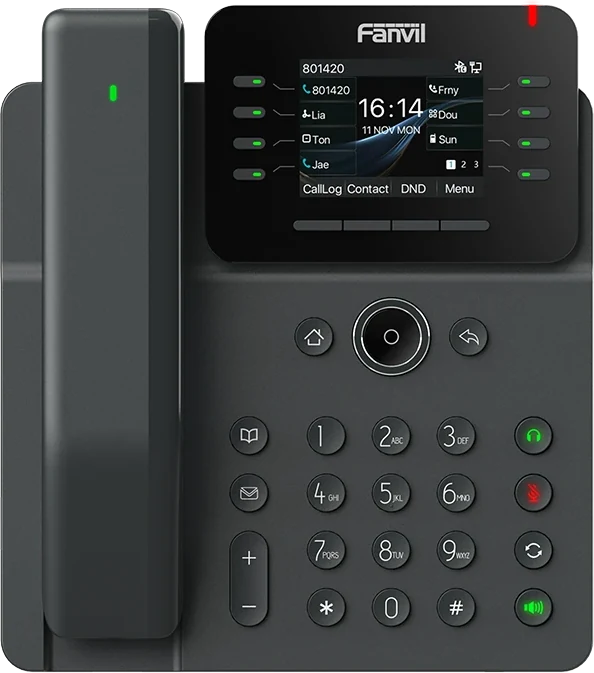
Desk phones are optional. Plenty of teams run entirely on the desktop and mobile apps, with a headset. Where you do want handsets, typically at reception, in shared spaces or for people who spend all day on calls, you can usually buy them outright or rent them monthly. Buying tends to be cheaper over the life of the phone. Renting spreads the cost and moves replacement onto the provider.
The other piece of hardware is one you already have: your internet connection and router. Voice needs a stable connection more than a fast one, and a router that can prioritize call traffic. That is worth checking before you move, not after.
One-time costs
- Setup and configuration: building the auto attendant, call routing, voicemail and user accounts.
- Porting your existing numbers.
- Any cabling work, if handsets are going where there is no network point.
- Training, even if it is an hour, so people know how to transfer a call on day one.
What you stop paying for
A move to a cloud phone system usually retires an on-site phone system and its maintenance contract, and often a set of copper phone lines. Before you cancel any copper line, check what else uses it. Alarm panels, fax machines, elevator emergency phones and some card readers still rely on analog lines, and some of those have code requirements. Move them deliberately, with whoever maintains that equipment.
How to compare quotes
- An all-in monthly cost per user, including taxes and fees, for your real headcount.
- The contract term, what happens at the end of it, and whether it renews automatically.
- What is included: auto attendant, voicemail to email, call recording, apps, number porting.
- One-time costs, listed separately.
- Who you call when something goes wrong, and whether they can come on site.
If you want a second opinion on what you pay today, that is exactly what our free Cost Clarity Audit is for. For how we set up Elevate Voice for local businesses, see business VoIP in Flint.